Everyone has a genetic code that they inherit from each of their parents. Each person's genetic code is made up of units of information, that contain instructions the body needs in order to function.
Most of the genetic code is identical between individuals. However, differences in the genetic code are called genetic variants.
Genetic variants contribute to traits that make us unique such as eye color, height, and taste preferences.
Genetic variants can also impact our risk of developing certain diseases — these are called risk variants.
To discover risk variants, scientists compare the genetic codes of people without a disease to people with a disease.
If a genetic variant occurs more frequently in people with a disease, it is associated with increased risk.
If a genetic variant occurs more frequently in people without a disease, it is associated with decreased risk.
Risk variants can increase or decrease a person's risk of disease and each can have different magnitudes of impact.
Some risk variants have a large impact on risk and some risk variants have a small impact on risk.
A single, small impact variant has little impact on risk, but many of them together have a larger impact.
To calculate a person's polygenic score for a particular disease, scientists add up the total number of risk-increasing and risk-decreasing variants, along with their magnitude of impact.
A polygenic score tells you how your risk for disease compares to others.
Scientists can determine polygenic scores for a whole population.
Some people will have a higher or lower score, depending on their number of risk-increasing or risk-decreasing variants, and the magnitude of impact of each variant.
People with an approximately even number of risk-increasing and risk-decreasing variants are at an average risk of disease based on their genetics.
People with more risk-increasing variants are at an increased risk of disease based on their genetics.
People with more risk-decreasing variants are at a decreased risk of disease based on their genetics.
Most people have average genetic risk of disease.
Your score can be higher than average meaning that you have increased genetic risk of disease compared to most people.
If your polygenic score is in the 95th percentile, you do not have a 95% chance of developing the disease. Rather it means that — out of 100 people — your polygenic score is higher than 95 people and the same or lower than 5.
Your score can be lower than average meaning that you have decreased genetic risk of disease compared to most people.
If your polygenic score is in the 5th percentile, you do not have a 5% chance of developing the disease. Rather it means that — out of 100 people — your polygenic score is higher than 5 people and the same or lower than 95.
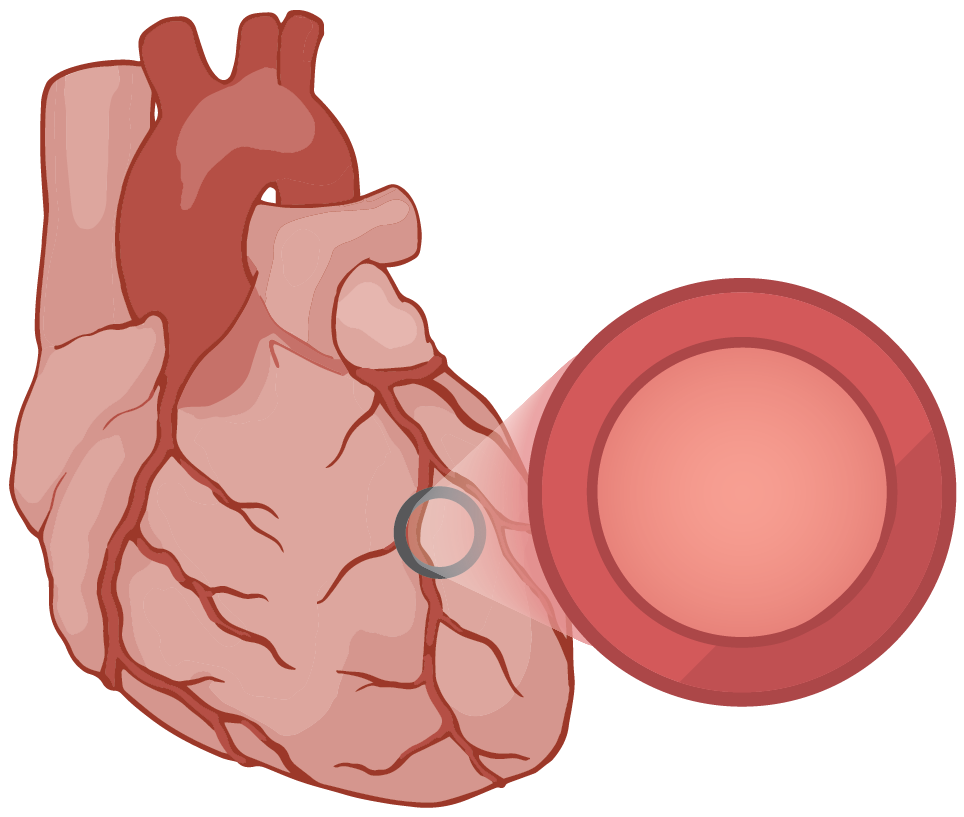
A polygenic score for coronary artery disease is based only on the genetic code you were born with.
Even though you can't change your polygenic score, following a healthy lifestyle and working with your health care team to treat any clinical risk factors can significantly decrease your risk.
The American Heart Association has outlined eight key factors that contribute to ideal cardiovascular health ('Life's Essential 8').
The more of these factors you keep in a healthy range, the lower your risk of heart disease and cardiovascular death.
A normal blood pressure is systolic ('top number') less than 120 mm Hg and diastolic ('bottom number') less than 80 mm Hg.
Keeping your blood pressure in the normal range is one of the most important steps you can take to protect your heart and blood vessels over time.
High levels of non-HDL, sometimes called “bad,” cholesterol can contribute to plaque buildup in the arteries.
An optimal non-HDL cholesterol is less than 130 mg/dl.
Lowering your cholesterol — through diet, physical activity, and medication when needed — directly reduces the buildup of plaque in your arteries.
A normal blood sugar ('fasting blood glucose') is is less than 100 mg/dl, and a normal HbA1c (a measure of your average blood sugar over roughly three months) is below 5.7%.
Keeping blood sugar in a healthy range helps protect the lining of your arteries and lowers your risk of coronary artery disease.
Current recommendations suggest at least 150 minutes/week of moderate intensity exercise, 75 minutes/week of vigorous intensity exercise, or a combination.
Meeting this target strengthens your heart, improves your blood pressure and cholesterol, and is one of the most effective ways to lower your cardiovascular risk.
Most adults need 7 to 9 hours of good-quality sleep per night.
Healthy sleep supports normal blood pressure, blood sugar, and weight, and too little or poor sleep is increasingly recognized as an independent contributor to heart disease — which is why the American Heart Association added it as the eighth factor.
A healthy diet is high in heart-healthy foods — fruits, vegetables, fish, whole grains — and low in unhealthy foods — sodium and sugar sweetened beverages.
Eating patterns such as the Mediterranean and DASH diets are consistently linked with better heart health and fewer cardiovascular events.
A normal weight is defined as a body mass index (BMI) less than 25 kg/m2.
Reaching and maintaining a healthy weight improves your blood pressure, cholesterol, and blood sugar, and eases the overall strain on your heart.
Tobacco use is a leading preventable cause of coronary artery disease. This includes not only cigarettes but also e-cigarettes and vaping, as well as exposure to secondhand smoke.
Never using tobacco — or quitting if you currently do — is one of the most powerful things you can do for your heart.
The Fahed Lab at Massachusetts General Hospital and the Broad Institute studies how genetics, cardiovascular imaging, and data science can better predict and prevent heart disease. Explore the lab's latest research, publications, clinical trials, and news.
Visit the Fahed Lab